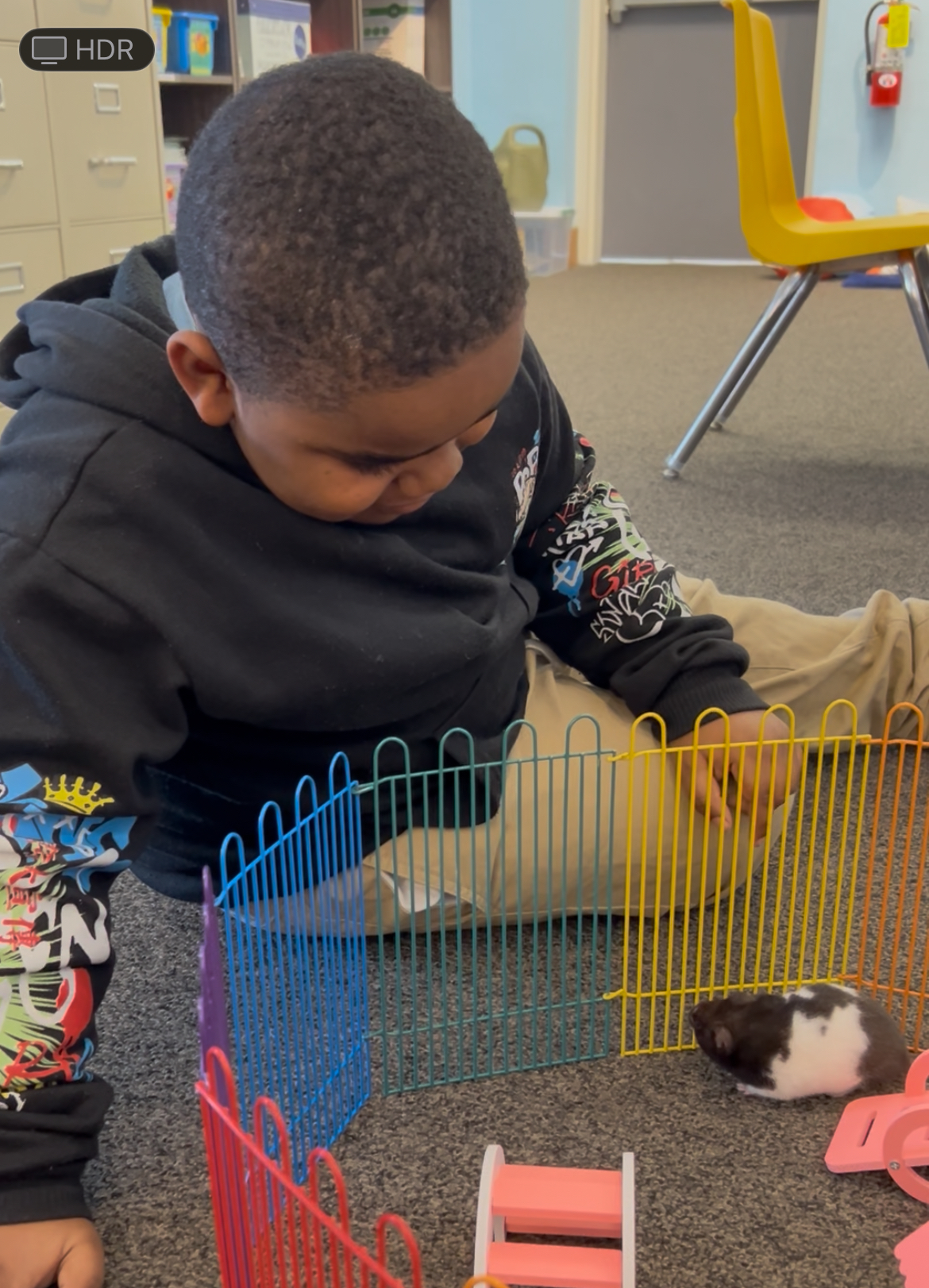
Now that the initial buzz of the new school year has settled, classroom dynamics are in full swing. Yet as academic expectations pick up and classroom routines solidify, autumn can bring its own challenges. Long school days, sensory overload, and complex social dynamics can leave many students feeling anxious or emotionally drained. Even after children adjust to their schedules, many continue to navigate everyday stress, emotional regulation, or finding their voice within the classroom community.
As educators, helping students feel emotionally safe is just as important as teaching reading, math, and science. Students who feel calm, connected, and supported are better prepared to learn, participate, and build positive relationships with their peers.
One simple yet powerful way to foster that environment is through a classroom pet.
More than just an engaging addition to the classroom, pets provide daily opportunities for students to practice empathy, responsibility, patience, and emotional regulation. Caring for a living animal creates routines that help students feel grounded while offering moments of comfort throughout the school day.
Why Emotional Well-Being Matters in the Classroom
Learning doesn’t happen in isolation. Students bring their emotions with them each day, and those emotions directly affect their ability to focus, participate, solve problems, and build relationships.
Some students arrive excited and eager to learn. Others may be coping with family changes, academic struggles, sensory overload, or worries that aren’t immediately visible. A classroom that intentionally supports emotional well-being helps every student feel seen, valued, and capable of succeeding.
Classroom pets naturally become part of that supportive environment. Their consistent presence offers something many students need: a calm, predictable companion that asks for nothing more than gentle care and respect.
A Quiet Presence During Stressful Moments
Unlike many classroom management strategies, a classroom pet doesn’t require instruction or intervention to provide comfort. Simply watching a fish glide through an aquarium, observing a guinea pig munch on hay, or seeing a leopard gecko bask under its heat lamp can encourage students to slow down and reset.
Animals live in the present moment. Watching them often encourages children to do the same.
Many teachers choose to position the classroom pet near a reading nook, reflection area, or calming corner. Students don’t need to interact directly with the animal to benefit. Sometimes a few quiet minutes of observation are enough to help a child regulate their emotions before returning to learning.
One teacher shared:
“Whenever my students feel anxious, nervous or just overwhelmed they know they can go to the fish tank, pull up a chair and just stare at the fish until they’re ready to come back to class… Kids find this very therapeutic.” — Leticia Sanders, Pets in the Classroom grant recipient
It’s no surprise that 94% of teachers reported a decrease in student anxiety after introducing a classroom pet. Whether students are quietly observing a fish swim or watching a hamster explore its habitat, these small moments can help children regulate their emotions and return to learning with a calmer mindset.
Building Empathy One Small Moment at a Time
Empathy isn’t learned through worksheets. It’s developed through experience.
Every day, classroom pets provide opportunities for students to think about the needs of another living creature.
Questions like:
- Why do you think our hamster is sleeping right now?
- Why shouldn’t we tap on the aquarium glass?
- How can we tell when our guinea pig wants quiet time?
- What does our pet need to stay healthy and happy?
These conversations encourage perspective-taking and help students recognize that animals communicate through behavior rather than words.
As students become more aware of their pet’s needs, they often become more aware of one another’s as well. In fact, 97% of teachers reported increased empathy and compassion, while 94% observed stronger social skills after bringing a classroom pet into their learning environment.
One teacher described that transformation perfectly:
“At the beginning of the year they think mice are gross and bad and by the end they all have a soft spot for them. It helps them see ‘unlovable’ animals as lovable.” — Anika McCormick, Pets in the Classroom grant recipient
Moments like these remind us that caring for animals often helps children become more compassionate toward the people around them as well.
Confidence Through Responsibility
One of the greatest gifts a classroom pet provides is the opportunity for students to contribute in meaningful ways.
Whether measuring food, helping feed the pet, recording observations, checking water levels, or assisting with habitat care, students quickly realize that their actions matter.
For children who sometimes struggle academically or socially, caring for the classroom pet can become a source of confidence. Completing an important responsibility successfully gives students a sense of purpose and accomplishment that often carries over into other parts of the school day.
The survey found that 97% of teachers observed increased student responsibility, while 90% reported improvements in student self-esteem.
One teacher witnessed that growth firsthand:
“I have a student that struggles with behavior every single day and he took on the responsibility of feeding our pet… I have seen a dramatic improvement in his behavior in class!” — Morgan Jarabe, Pets in the Classroom grant recipient
These moments remind us that classroom pets don’t simply teach animal care—they help students discover that they are capable, trusted, and able to make a meaningful difference.
Supporting Positive Classroom Relationships
Classroom pets naturally bring students together.
Children gather to observe new behaviors, discuss questions, celebrate milestones, and work together to provide excellent care. These shared experiences encourage conversation and cooperation in ways that feel authentic rather than forced.
Teachers frequently notice students who might not normally work together collaborating during pet-related activities. The classroom pet becomes common ground—a shared responsibility that strengthens classroom community.
One survey respondent shared:
“I have seen so many students come out of their shells and blossom because their love of our classroom pet has given them the ability and outlet to speak to myself, other teachers, and other students.” — Lauren Gilbert, Pets in the Classroom grant recipient
As classroom relationships grow stronger, teachers often notice improvements in overall classroom culture as well. The 2026 survey found that 84% of teachers reported fewer necessary disciplinary measures, reinforcing the idea that a connected classroom community leads to more positive student interactions.
Emotional Growth Supports Academic Success
Helping students feel emotionally secure isn’t separate from academics—it supports them.
When students feel connected to their classroom, they’re more likely to participate, ask questions, stay engaged, and persist through challenges.
Teachers participating in the 2026 survey reported:
- 97% observed increased student engagement.
- 76% saw improvements in attendance.
- 75% noticed improvements in academic performance.
Those improvements happen because classroom pets create authentic learning opportunities across the curriculum. Students naturally practice reading, writing, science, math, observation, communication, and critical thinking while caring for and learning about their classroom companion.
One teacher summed it up beautifully:
“Our first-grade classroom pet has made a huge impact on our students socially, emotionally, and academically…The excitement and curiosity the pet brought into the classroom helped increase student engagement and created a warm, connected classroom community— Nicole Clarke, Pets in the Classroom grant recipient
When students are emotionally connected to their learning environment, academic success often follows.
Creating an Emotionally Supportive Classroom
You don’t need elaborate lessons for your classroom pet to make a difference. Often, it’s the everyday routines that have the greatest impact.
Consider incorporating your classroom pet into your daily schedule by:
- Beginning the morning with a few minutes of quiet observation.
- Rotating classroom pet jobs so every student has an opportunity to help.
- Encouraging students to journal about the pet’s behavior or ask scientific questions.
- Reading books aloud near the habitat or inviting students to read independently to the pet.
- Celebrating acts of kindness, responsibility, and teamwork as students care for their classroom companion.
These small, consistent moments help reinforce the skills students will carry well beyond the classroom.
More Than a Classroom Pet
A classroom pet is far more than a science lesson or a classroom decoration. It becomes a quiet teacher of compassion, patience, responsibility, and resilience.
Every feeding, observation, and moment of care helps students develop social skills through teamwork and communication, strengthen emotional well-being through empathy, confidence, and reduced anxiety, and support academic growth by increasing engagement, curiosity, attendance, and real-world learning.
The results speak for themselves. Across North America, teachers consistently report that classroom pets help create learning environments where students feel safe, connected, and excited to come to school.
Whether it’s a fish greeting students each morning, a guinea pig encouraging empathy, or a bearded dragon inspiring scientific curiosity, classroom pets leave a lasting impression—one that often extends far beyond the school year.