Science is most meaningful when students can experience it firsthand. Classroom pets turn abstract concepts into real, observable systems that students interact with every day. From biology and ecosystems to data collection and scientific reasoning, pets help students see science in action.
Here are five clear ways classroom pets bring science learning to life.
1. Living Organisms Turn Observation Into Real Science
Classroom pets give students the opportunity to observe living organisms over time—not just during a single lesson. Students notice patterns in behavior, movement, feeding, and growth, and begin asking their own questions based on what they see.
These daily observations help students practice scientific thinking in a natural way, building curiosity and strengthening their ability to describe, compare, and explain real-life phenomena.
2. Habitats Make Ecosystems and Adaptations Visible
A classroom pet’s habitat functions as a working ecosystem. Students learn how factors like temperature, light, water, and space affect an animal’s ability to survive and thrive.
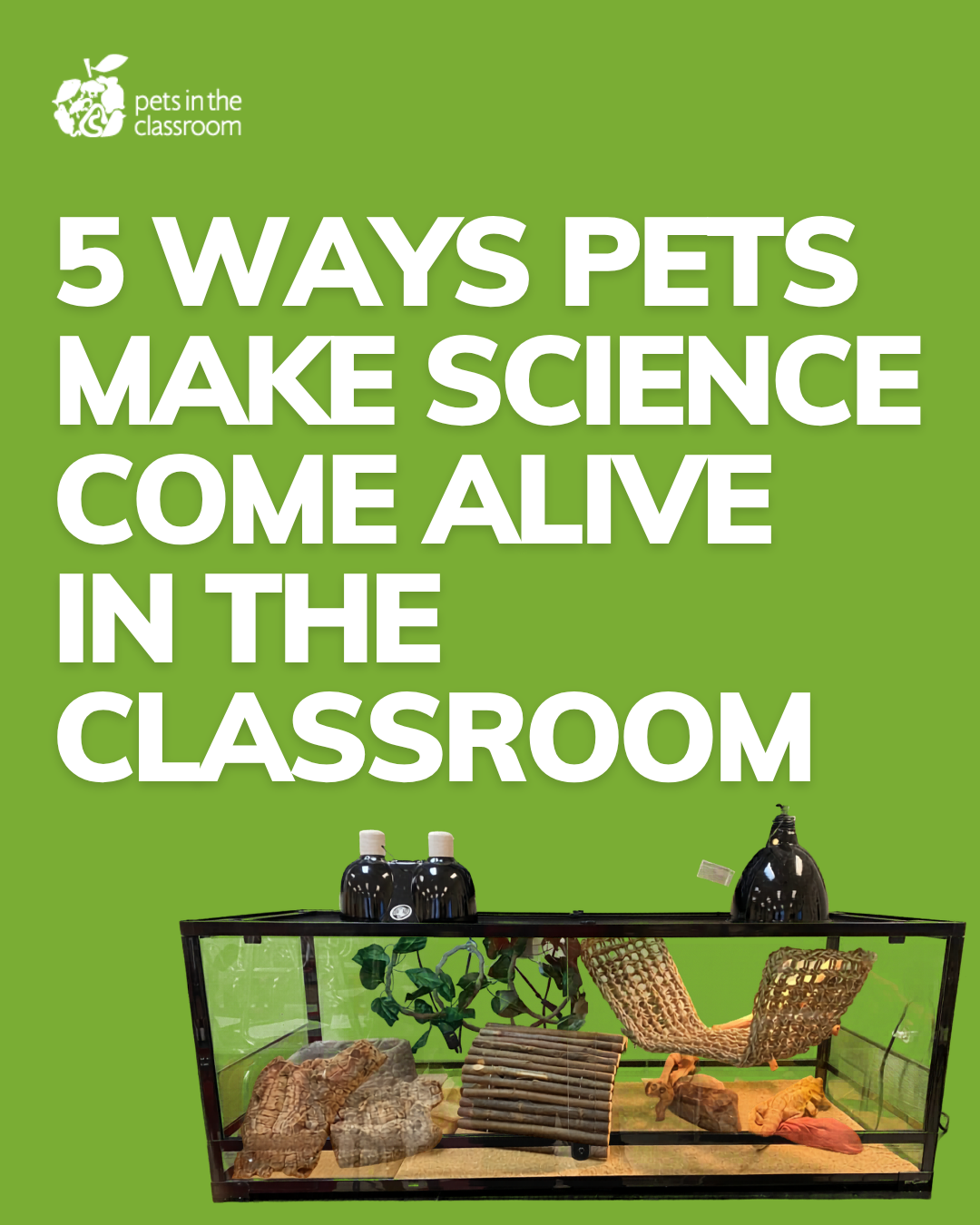
Rather than reading about adaptations in a textbook, students see them in action—whether it’s a reptile basking under a heat lamp or a fish responding to changes in its environment. This helps life science concepts feel concrete and relevant.
3. Daily Care Demonstrates Cause and Effect
Caring for a classroom pet turns abstract cause-and-effect concepts into something students can see. Feeding schedules, clean habitats, and proper care routines directly impact an animal’s health and behavior.
As students participate in these routines, they begin to understand how small changes can lead to different outcomes, which is an essential foundation for scientific reasoning and systems thinking.
4. Pets Enable Authentic Data Collection and Investigation
Classroom pets naturally lend themselves to data-driven learning. Students can track growth, observe behavior patterns, record environmental conditions, and compare changes over time.
These investigations allow students to practice real scientific skills such as measuring, recording observations, identifying patterns, and drawing conclusions.
5. Curiosity Extends Science Beyond the Lesson
Because classroom pets are part of students’ everyday environment, science learning doesn’t stop when the lesson ends. New questions emerge organically: Why did the animal behave differently today? What caused that change? What happens next?
This ongoing curiosity keeps students engaged and encourages them to think like scientists—observing, questioning, and exploring long after a unit has ended.
Science Learning That Sticks
Classroom pets help transform science from something students read about into something they experience. Through observation, habitat care, daily routines, and hands-on investigation, pets make science engaging, memorable, and meaningful.
Pets in the Classroom supports teachers by providing grants, resources, and guidance that make it possible to responsibly bring these learning experiences into classrooms across the country.